
High Elevation in the Catalinas with Mike Hillman

Difficulty: Moderate (some walking on mild slopes, drive time to location about 50 minutes on paved roads)

Enjoy birding where Tucson residents escape the summer heat in the small mountain hamlet of Summerhaven.  We’ll look for mixed warbler flocks which may include Red-faced, Orange-crowned, Virginia’s, Townsend’s, Hermit, Wilson’s, and Grace’s Warblers. Birding in the conifer forests of Mt. Lemmon can also produce species like Hairy Woodpecker, Steller’s Jay, Mountain Chickadee, and Western Flycatcher. Limited to 9 participants.

Red-faced Warbler, Greg Lavaty
Tubac Anza Trail with Bill Lisowsky and Cedar Stanistreet

Difficulty: Moderate. Fairly flat dirt walking trails that may be muddy, for 1 – 2 miles roundtrip under mostly shaded areas. Bathroom nearby at Ron Morriss Park. Drive time to location approximately one hour.

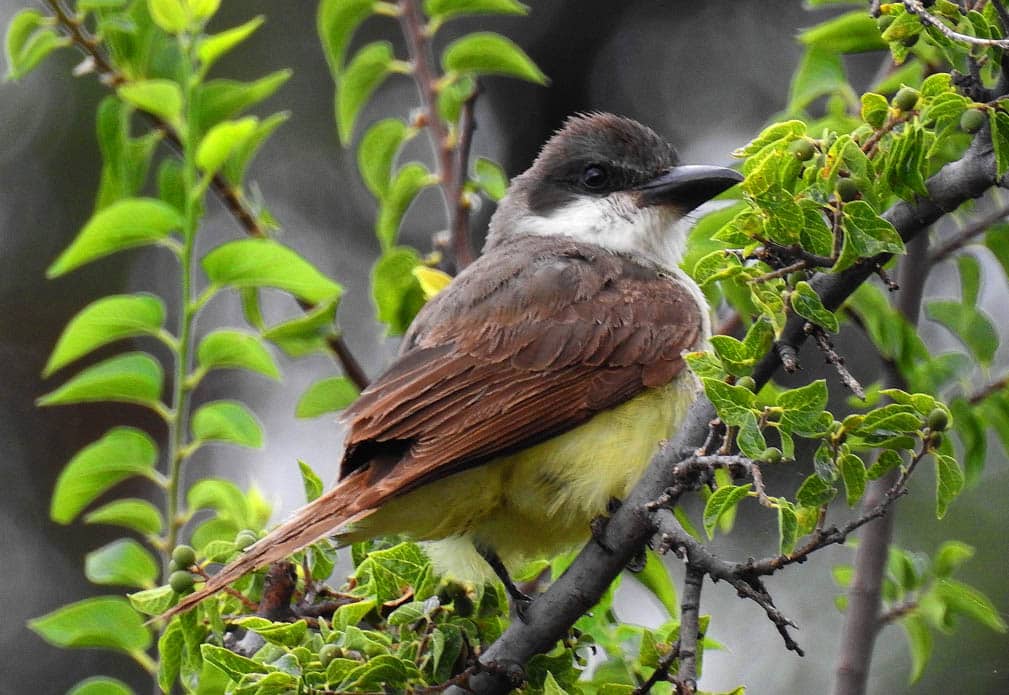
A stroll through this lush riparian corridor along the Santa Cruz provides many opportunities for fall migrants, Zone-tailed and Gray Hawks, Thick Billed, Tropical, Cassin’s and Western Kingbirds, and many chats, tanagers, and warblers. There might even be a chance of seeing Rose-throated Becards, though their numbers have been declining along the river. Monsoon rains will dictate the portions of the trail we walk. Limited to 9 participants.

Thick-billed Kingbird, Martin Molina

Harshaw Creek with Jake Thompson & Henrey Deese

Difficulty: Moderate. Some walking on mild slopes, and possibly rocky/uneven surfaces, but mostly on gravel road. Drive time to location approximately one hour on paved & gravel roads.

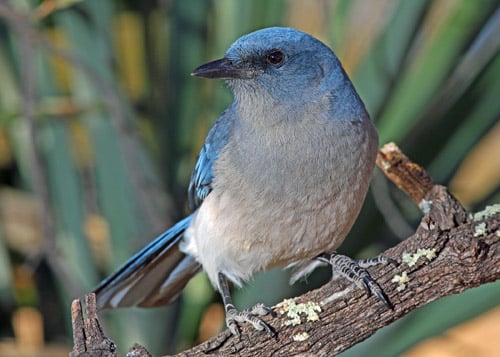
Join Patagonia resident and guide, Jake Thompson, to bird his favorite birding patch. Harshaw Creek in the Patagonia Mountains is lined with oaks and sycamores making it a great location for woodpeckers, flycatchers, tanagers, and more. We might catch a look at one of the Coppery-tailed Trogons that breed through here and Mexican Jays are common in the oaks. Limited to 9 participants.

Mexican Jay, John Hoffman

Scorpion Adventure with Chris Benesh sponsored by Field Guides

Difficulty: Moderate (Will include walking in the dark on possibly some uneven surfaces and gravel roads. Recommended to have a black light)

Go beyond the birds and explore the world of scorpions with Chris Benesh of Field Guides. Arizona is one of the world’s hot spots for scorpion diversity, especially Southeast Arizona! Location will be up to the discretion of the leaders based on weather, but will be within 45 minutes of the festival venue. Specific meeting instructions will be emailed beforehand.  Limited to 10 participants.

Giant hairy scorpion by Doris Evans

Patagonia Lake State Park with Troy Corman

Difficulty: Moderate. Walking along mostly level trail but with uneven surfaces for around 2 miles, there is one area with steep stairs. Bathroom on-site. Drive time to location about 80 minutes.

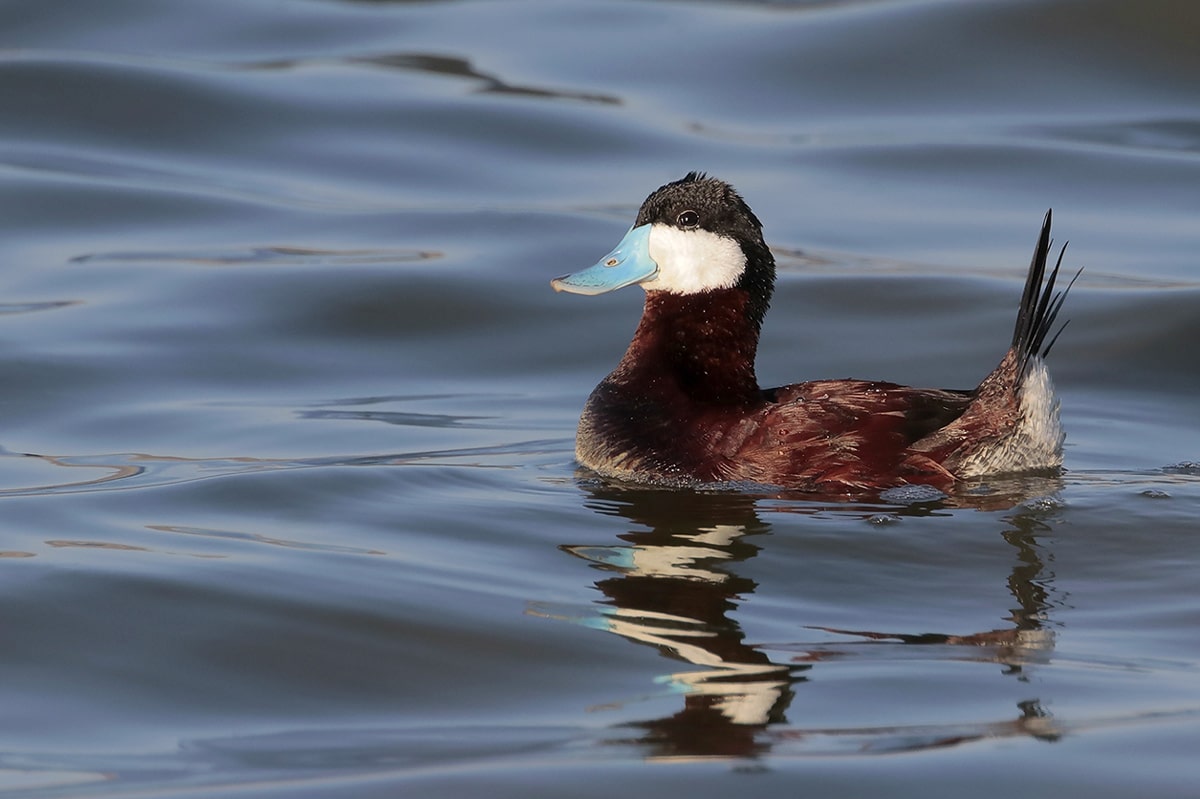
Patagonia Lake is the top eBird hotspot in the state thanks to its mix of waterbirds and great riparian habitat. Mexican Duck, Ruddy Duck, and Neotropic and Double-crested Cormorants should be readily seen on the lake along with raptors, flycatchers, and tanagers along the Birding Trail. As one of the few “large” bodies of water in SE Arizona you never know what could show up. Limited to 9 participants.

Ruddy Duck, Greg Lavaty

Going Batty with Karen Krebbs

Difficulty: Easy (Easy watching from pathway/parking area and short drive.)

Join Karen Krebbs on an adventure to watch thousands of bats come out of their roost at dusk. Karen has studied bats for more than 30 years and will share her vast knowledge of these misunderstood night creatures. This nightly Tucson spectacle even brings in a Cooper’s Hawk or Peregrine Falcon on occasion. You will meet Karen on-site on the east side of Tucson near Pantano and Broadway. Drive time to meeting location from festival venue is approximately 15 minutes, specific meeting instructions will be emailed beforehand. Limited to 20 participants.

Lesser long-nosed bat by Dan Weisz

Looking for Owls at Catalina State Park with Rick Bowers

Difficulty: Moderate (Will include walking in the dark on paved road & wide trails. Bring a flashlight or headlamp to see where you are putting your feet.  Total distance is about 1 mile.)

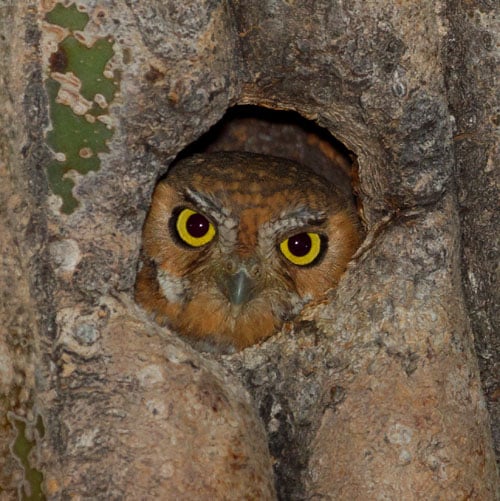
This state park is on the northwest side of Tucson and sits adjacent to the western slopes of the Coronado National Forest’s Santa Catalina Mountains. The mixture of Saguaro-Palo Verde desert scrub, mesquite bosque, and riparian vegetation makes great habitat for Western Screech-Owl, Elf Owl, Barn Owl and Great Horned Owl and other nocturnal creatures. While these species are possibilities, this is late in the season and seeing/hearing owls is not guaranteed. Be mindful that monsoon conditions could impact this outing. If clouds are minimal, the stars are fantastic! We’ll also look for any other monsoon critters that love the cool of the evening and the warmth of the road. We will go at a slow pace and be sure to bring a full water bottle and be prepared for hot weather. Drive time to the meeting location from the festival venue is about 40 minutes. Specific meeting instructions will be emailed beforehand. Limited to 10 participants.

Elf Owl by Jeremy Hayes

Sabino Canyon Evening Hike with Bob Orenstein

Lesser Nighthawk by Dan Weisz

Difficulty: Moderate. Will include walking in the dark, including some uphill on dirt trails and some paved road. Total distance about 2 miles. Bring 2 liters of water.

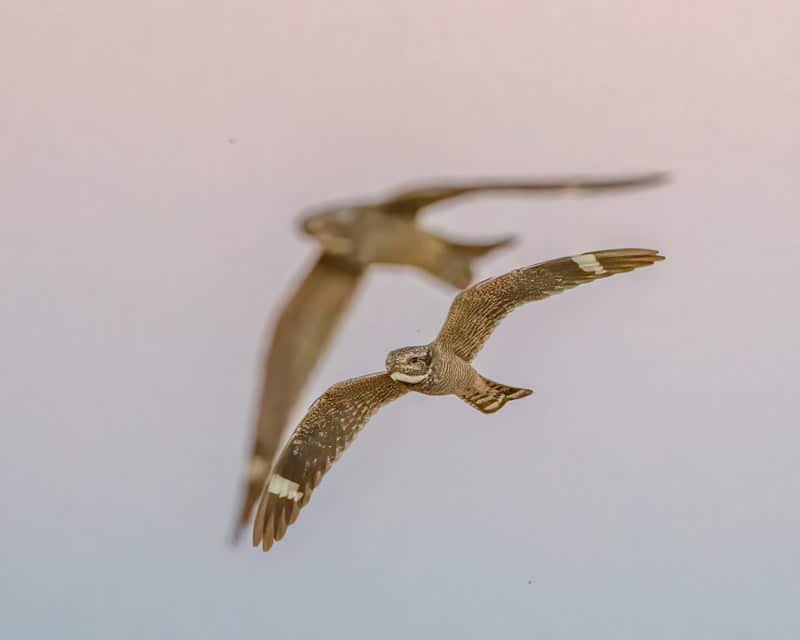
Sabino Canyon night hikes during monsoon season are a local favorite past-time. Bring your flashlight as we walk up in the light and walk down in the dark in search of birds, toads, snakes, bugs, and more! Good possibilities for Lesser Nighthawk and Common Poorwill at sunset and we’ll hope for monsoon rains so we can see and hear Spadefoots and giant Sonoran Desert Toads. Lizards, scorpions, and tarantulas are crowd favorites and maybe we’ll run into a Gila Monster. We will go at a slow pace and be sure to bring a water bottle and be prepared for hot weather. Drive time to meeting location from festival venue is approximately 25 minutes, specific meeting instructions will be emailed beforehand. Limited to 15 participants.

Lesser Night Hawk by Dan Weisz

Casa de San Pedro with Gordon & Lori Lam and Adam Dudley

Difficulty: Moderate. Although this is a generally flat natural trail, conditions can vary. You may encounter uneven or sandy footing, and depending on recent rains a few spots could be damp or slightly slippery. There may also be the occasional need to step over small branches or natural obstacles. Bathroom on-site. Drive time to location approximately 90 minutes.

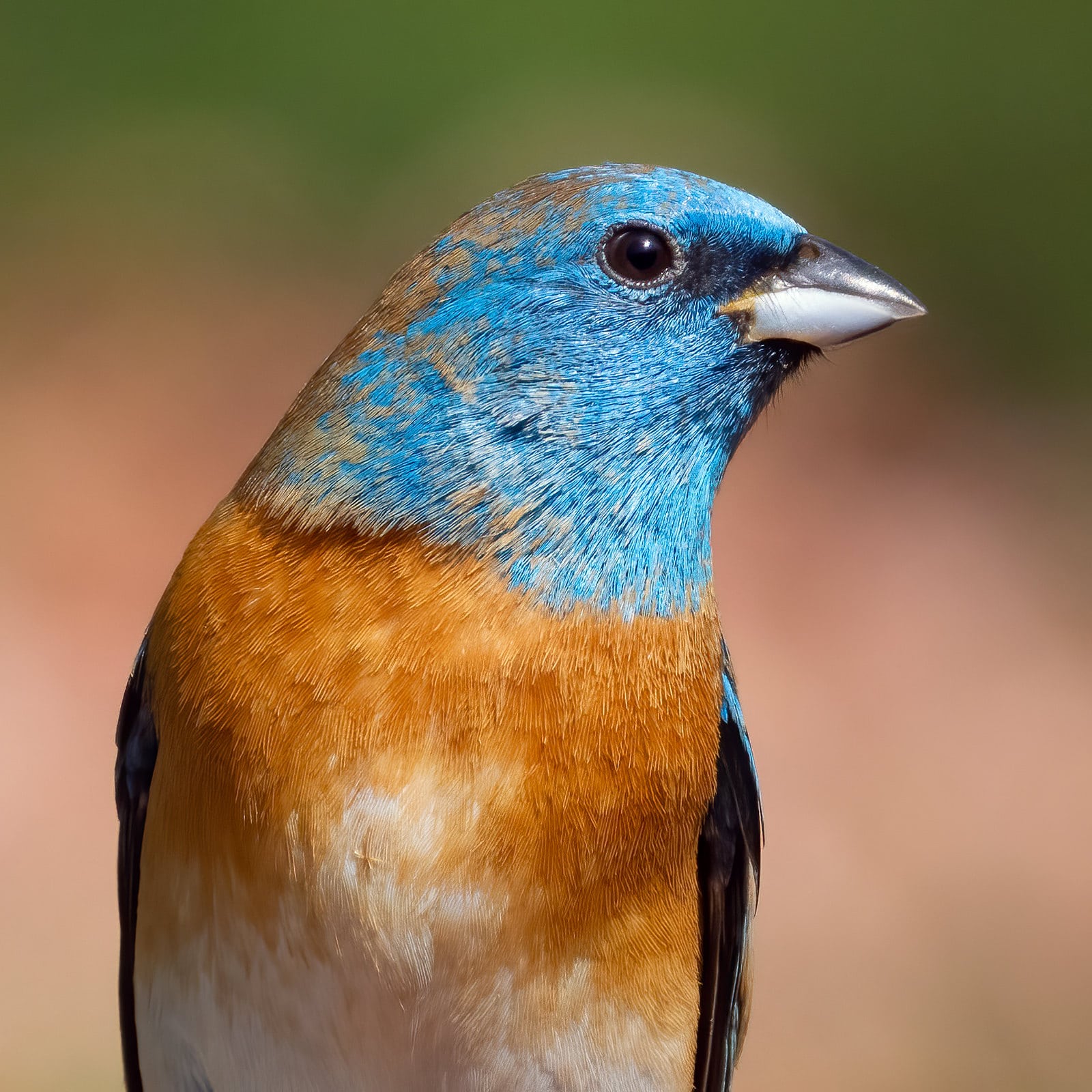
Located in the San Pedro Riparian National Conservation Area, Casa de San Pedro is an eco-friendly nature haven that offers a setting for fantastic birding along the San Pedro River and at their hummingbird feeders. Join local leaders Gordon & Lori Lam to enjoy many hummingbirds such as Black-chinned, Anna’s, Rufous, Broad-tailed, and Broad-billed, along with other likely species including Swainson’s and Gray Hawk, Western Kingbird, Botteri’s Sparrow, Lucy’s Warbler, and Lazuli Bunting. Limited to 9 participants.

Lazuli Bunting, Mick Thompson

Las Cienegas and Empire Ranch with Chris Rohrer

Difficulty: Moderate. Some walking on mild slopes, but still on excellent surfaces. Bathroom at Empire Ranch. Drive time to location approximately one hour plus driving on gravel/dirt roads.

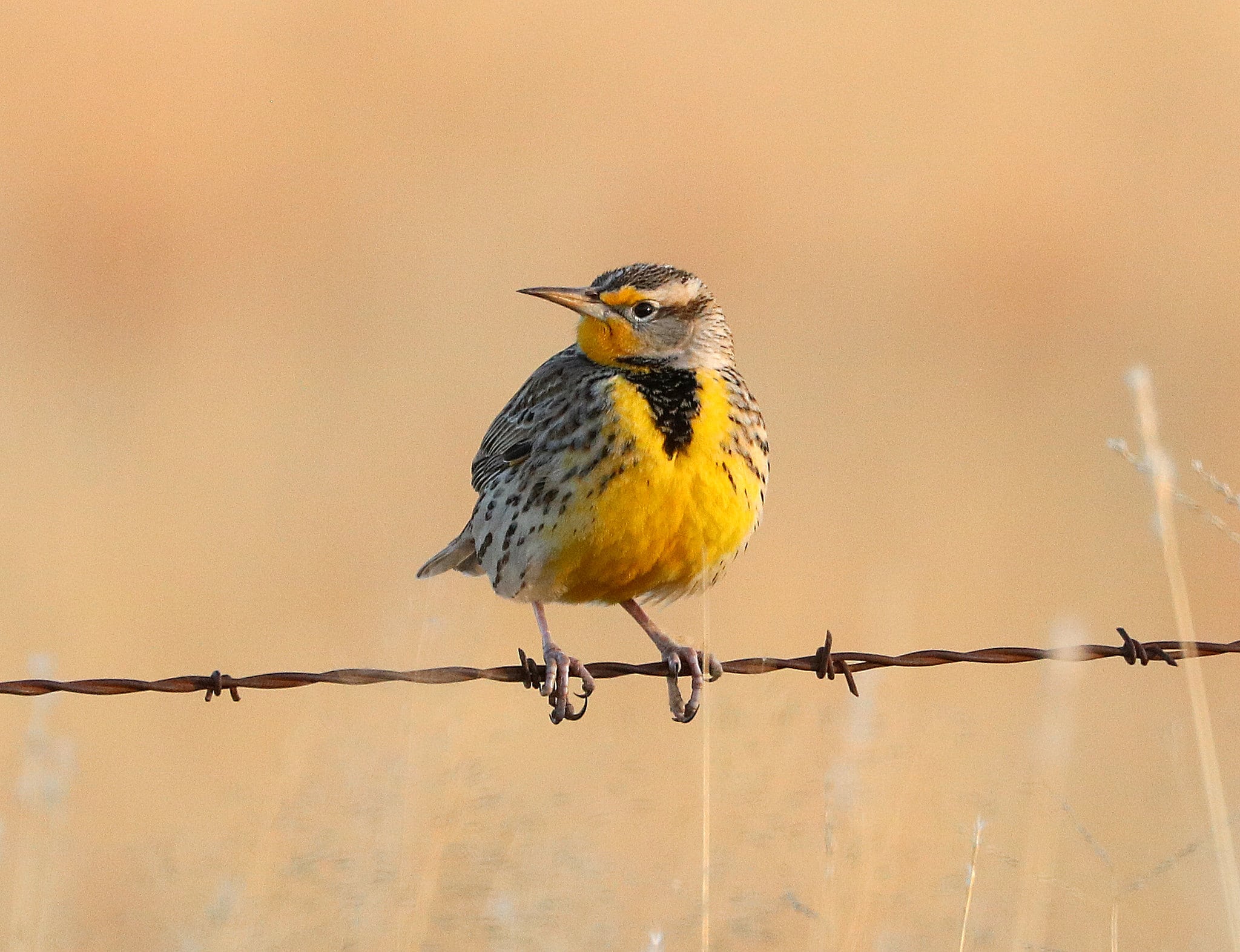
Las Cienegas is a 45,000-acre national conservation area with high desert grasslands, riparian strips and perennial streams, marshes, and juniper-oak woodlands. Here we can find grassland breeders such as Cassin’s, Botteri’s and Grasshopper Sparrows, Chihuahuan Meadowlark, and Loggerhead Shrike, as well as riparian-associated species including Gray and Zone-tailed Hawks, Yellow-billed Cuckoo, Blue Grosbeak, Yellow Warbler, and Summer Tanager. Las Cienegas is great for mammals, too — we’ll visit a colony of Black-tailed Prairie Dogs (road condition permitting) and keep an eye out for Pronghorn Antelope. Limited to 8 participants.

Chihuahuan Meadowlark, Alan Schmierer